Advertisement
By now you've probably heard that eco-friendly driving can help minimize your carbon footprint and reduce dependency on imported oil. Perhaps you've even considered taking up green driving in a car or truck that runs on an alternate fuel? But have you ever wondered how and where you'll fuel up your new wheels? Read on and we'll provide some clues.
First, however, let's define our alternate fuels set. We'll make it simple and use the U.S. Dept. of Energy's list, which includes:
- E85 Ethanol Flex-Fuel
- Biodiesel
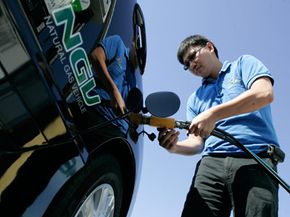
- Natural gas -- including compressed natural gas (CNG) and liquefied natural gas (LNG)
- Liquefied petroleum gas (LPG, also known as Propane)
- Hydrogen
- Electricity
Methanol, or wood alcohol, was once viewed as a promising alternate fuel, but to date, no cars designed to run on methanol are being manufactured [source: Alternative Fuels and Advanced Vehicles Data Center]. Methanol is used as a base for making biodiesel, though.
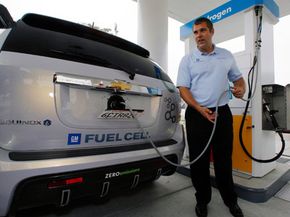
Liquid alternative fuels, such as E85 and biodiesel, are commonly available through slightly modified versions of the self-service pumps used to dispense conventional gasoline and diesel. Pressurized gases like CNG and LPG have traditionally been handled by fueling station attendants. However, self-service pumps are increasingly being manufactured to handle pressurized fuels, including hydrogen. Self-service pumps help make it possible to offer pressurized alternate fuels 24/7, just like gasoline and other liquid fuels. The newest alternative fuels pumps for pressurized fuels operate very much like contemporary gasoline pumps--delivering the fuel through a hose connected to the vehicle's fueling port, while also computing the amount and cost of the fuel pumped into the vehicle.
Will one alternate fuel type emerge victorious nationwide? Probably not. In the East, analysts foresee electric vehicles achieving dominance in large metro areas [source: Amadon]. Ethanol will likely find continuing favor in the Midwest, where the crops used to produce it are primarily grown. And electric cars may also take charge in the emerging West Coast megalopolis, while the alluring fuel efficiency of diesels could make biodiesel the fuel of the future for those who routinely traverse America's wide-open spaces.
On the upcoming pages, we'll look at the current distribution of alternate fuel stations across the United States. But first, let's discuss how alternate fuels are dispensed.
Advertisement