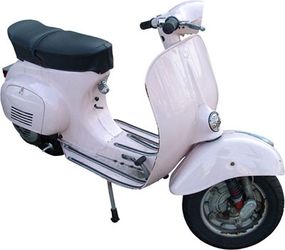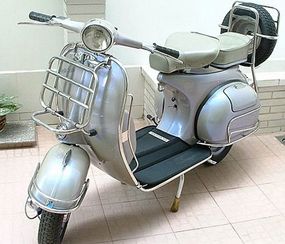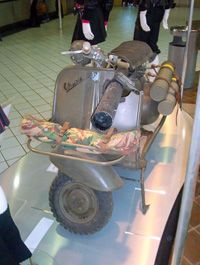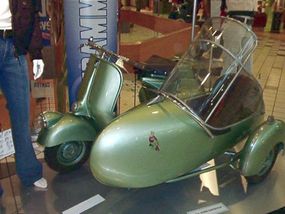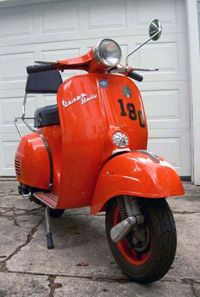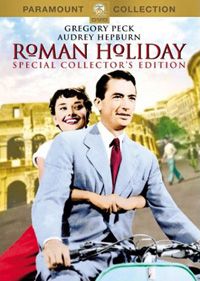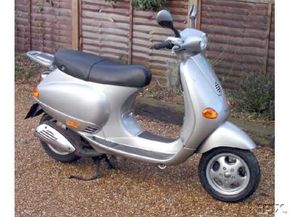
The Vespa scooter has been many things to many people. To post-war Italy, it represented an economic resurgence for a struggling industrial family. To British teens of the early 1960s, it was a vital aspect of a cultural and fashion trend. For people in developing countries, Vespas can be an important and affordable means of transportation. And for some, Vespas just represent nostalgic fun.
Motorcycle Image Gallery
In this article, we’ll look at what Vespas are, how they are made, the history behind the scooter and the Vespa style that has made it so popular.
Advertisement
Why Scooters?
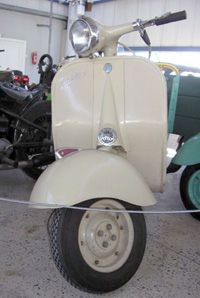
Scooters are two-wheeled vehicles powered by a small engine. Although it’s similar in concept to motorcycles, it has some important differences. The wheels of a scooter are fastened to the end of a short axle, rather than being mounted between a “fork” in the frame. The engine is usually concealed in a cowling of some kind, making them quieter and less likely to get oil or grease on the rider’s clothes. Scooters generally have less horsepower than motorcycles. The overall effect is a more “civilized” vehicle meant for practical daily use. Today, a scooter can be defined as a two-wheeled vehicle built on a monocoque frame with a 250 cubic centimeter (cc) engine or smaller. There are scooters with larger engines, but they essentially represent a subclass of vehicles in between scooters and motorcycles. Many jurisdictions legally consider them motorcycles.
People choose to drive scooters for a number of reasons, not the least of them is the exceptional gas mileage a scooter can provide. Most models can achieve better miles per gallon (mpg) ratings than all cars, but the most eco-friendly hybrid cars are in the 60-70 mpg range--equal to the Vespa.
Scooters are also convenient. Navigating city traffic and tight urban streets is a lot easier on a scooter than in an SUV, and parking is no problem. For those living in rural areas, a scooter is a great way to make relatively short trips. They’re easier to ride than a motorcycle, and the body panels ensure that clothes aren’t likely to be splashed with mud and road dirt.
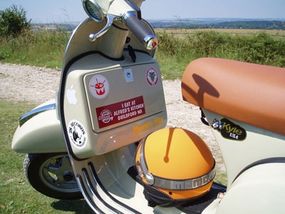
A scooter is a lot easier on the wallet than a car, as well. A brand new scooter can be as little as $800, with many scooters available for less than $2,000. Of course, a scooter with the legendary Vespa name on it often comes at a premium (prices range from $2,000 to over $6,000), and vintage scooters go for collector’s prices, sometimes fetching thousands of dollars.
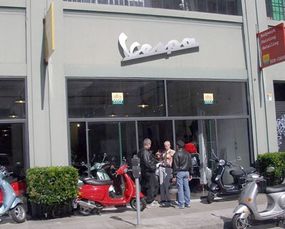
For some scooter enthusiasts, it’s a matter of style. The shape of a Vespa evokes a fun retro feeling that many riders enjoy as they cruise around town. Anyone who considers themselves a Mod (which we’ll explain later) simply can’t do without a Vespa.
Advertisement