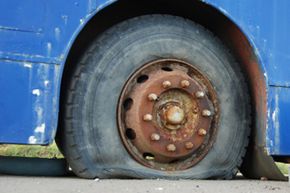
Flat tires, like taxes and death, are simply an inevitable certainty in life. So, rather than thinking about what you'll do if you get a flat tire, start thinking about what you'll do when you get a flat tire. Face it: Sooner or later, you're likely to feel the dreaded pull of an unstable car or hear the flap-flap-flap of dead rubber.
There are a few things you can do in basic vehicle maintenance before hitting the road that may minimize your chances of getting a flat tire; however, it's best if you know how to change a flat, just in case. Changing a flat tire can seem daunting at first, but car manufacturers have made the process as easy and straight-forward as possible.
Advertisement
More importantly, knowing how to change a tire can also save you money and time. From a car maintenance standpoint, a repair or road service club is only as good and as fast as the next tow truck that happens to pass by, and if you have a meeting or an appointment to get to (flats seem to happen at the worst of times), then having the skills necessary to change a tire can literally make or break your day.
It's also a good feeling to know you're capable in a roadside emergency and that you have the knowledge and skills to get your car back on the road again, including the ability to perform basic automotive maintenance. However you decide to look at it, understand that learning how to change a tire ranks on the auto maintenance difficulty scale somewhere near checking the oil level and monitoring your tire pressure -- regardless, it's a good skill to learn, even if you never use it.
Keep reading to find out how to change a tire, and some of the reasons behind doing it correctly.
Advertisement