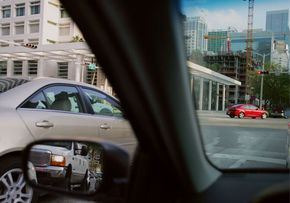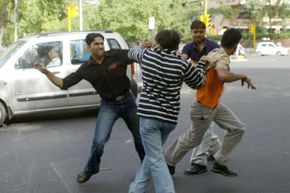
"Road rage" became a popular buzz term in the '90s as stories about motorists attacking one another in parking lots and intersections seemed to increase.
So what do you think of when you hear the term "road rage"? It's one of those catch phrases everyone has heard, and yet there is no common definition we can all use. Often, people use terms like "road rage" and "aggressive driving" interchangeably.
Advertisement
And while some might say that aggressive driving includes everything from cutting someone off on purpose to tailgating to making obscene gestures and cursing at other drivers, others might claim road rage refers only to incidents where violence erupts between drivers and passengers -- in or around cars. (There are just as many who might reverse those two definitions.) One thing is certain -- road rage is a dangerous phenomenon that can happen to any one of us, either as a perpetrator or a victim.
In most jurisdictions, road rage isn't a specific crime. Many aggressive driving maneuvers fall under the category of traffic violations, but there are only a few districts that try to define aggressive driving or road rage as an illegal activity. One reason most states don't classify road rage as a crime is that lawmakers often find it difficult to quantify road-rage behaviors. For example, a law might state that it's illegal to follow a car too closely. But what is too close and who makes that determination? Without providing specific parameters, the law is completely subjective.
For the purposes of this article, we'll look at road rage in the broadest spectrum, from driving aggressively to violent confrontations between drivers. We'll examine the psychology behind road rage, common behaviors associated with road rage, ways to avoid getting into confrontations with angry drivers and how to determine and alleviate your own road rage. We'll also look at some statistics on road rage, including which cities have the most aggressive drivers.
In the next section, we'll learn about the psychology behind road rage and how a well-adjusted human being can become a highway vigilante.
Advertisement