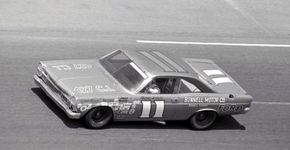
The Top 10 Daytona 500s Ever
by Larry Woody
The Top 10 Daytona 500s Ever
Gearheads call it "The Great American Race" and "The Super Bowl of NASCAR." Unlike most of its less-noble brethren, it has resisted shilling its name to a corporate sugar daddy. It will never be christened "The ACME Weed-Whacker 500" or "The Yoo-hoo 500."
No, it's the Daytona 500 -- proud, unique, and special. Always has been. Always will be.
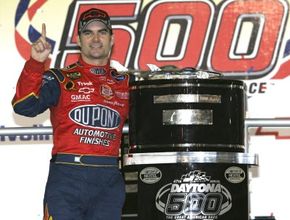
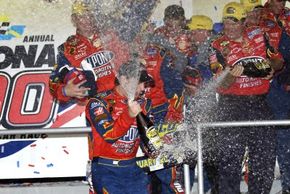
![]() ©Dorsey Patrick As Jeff Gordon found out, winning the Daytona 500 can make a NASCAR driver's career. Gordon won the race in 1997 and 2005 [shown here]. See more NASCAR pictures. |
|
Up Next
|
This is the biggest, baddest stock car race on the planet. Daytona International Speedway ? located in sunny Daytona Beach, Florida -- is a 2.5-mile asphalt Augusta. It's Lambeau Field at 200 mph, Wrigley Field sideways on two wheels. Daytona is home to 500 miles of legend, lore, white knuckles, and goose bumps.
We've sifted through five decades of thrills and spills and pinpointed the top 10 Daytona 500s of all time. Our list features daredevils with names like "Fireball," "The King," and "The Intimidator." And first-name-only heroes like Mario and A.J.
Strap in, because it's going to be a wild ride.
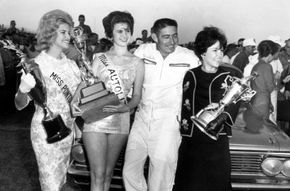
No. 10: The 1962 Daytona 500
Winner: Glen "Fireball" RobertsMargin of victory: 27 seconds
Why it's No. 10: "Fireball" Roberts -- who acquired his nickname not for his skill as a racer but rather for the flaming fastballs he threw as a high school baseball player -- was among the original superstars of NASCAR.
Known for his flare on the track, Roberts was a frequent winner in the 1950s and early 1960s – except, ironically, when he raced in his hometown of Daytona Beach, Florida. In 1955, he finished first on the Daytona beach course but was disqualified because of a mechanical technicality. In 1961, he was running away with the Daytona 500, but his day ended abruptly when his car's engine blew.
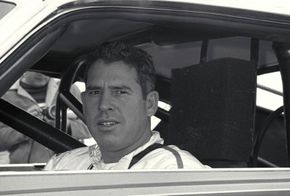
![]() ©Ford Motorsports History via Wieck "Fireball" Roberts will always be remembered for his exciting win in the 1962 Daytona 500. |
In the 1962 Daytona 500, however, he wouldn't be denied. After dining on his favorite pre-race meal, a bologna sandwich, Fireball strapped himself into his car and rolled onto the track for some payback.
The race came down to a spirited two-car battle between Fireball and a young upstart named Richard Petty. Ultimately, Roberts pulled away and won by 27 seconds. Petty would go on to win a record 200 NASCAR races; Roberts, meanwhile, died tragically in 1964 after a gruesome crash in the World 600 in Charlotte, North Carolina.
On February 18, 1962, however, time stood still. It was the day Roberts beat a legend-in-the-making and finally left a lasting mark on his hometown.
Here are the top-10 finishers in the 1962 Daytona 500:
| Finish | Driver | Car | Money Won |
| 1 | Fireball Roberts | 1962 Pontiac | $24,190 |
| 2 | Richard Petty | 1962 Plymouth | $10,250 |
| 3 | Joe Weatherly | 1962 Pontiac | $7,100 |
| 4 | Jack Smith | 1962 Pontiac | $4,025 |
| 5 | Fred Lorenzen | 1962 Ford | $2,975 |
| 6 | David Pearson | 1962 Pontiac | $2,075 |
| 7 | Rex White | 1962 Chevrolet | $1,150 |
| 8 | Banjo Matthews | 1962 Pontiac | $1,050 |
| 9 | Ned Jarrett | 1962 Chevrolet | $850 |
| 10 | Bob Welborn | 1962 Pontiac | $750 |
For more information on NASCAR and on high-performance cars, check out:
- To learn everything you need to know about "The Great American Race" -- from its history to the technical aspects of driving at Daytona International Speedway -- read How the Daytona 500 Works.
- Ever wonder what makes a stock car go? Read How NASCAR Race Cars Work to find out.
- Driver safety is a huge concern in NASCAR. Learn what measures the series takes in this area by reading How NASCAR Safety Works.
- Muscle cars embody the NASCAR philosophy of speed and power. Here are features on more than 100 classic muscle cars, including photos and specifications for each model.
No. 9: The 1967 Daytona 500
Winner: Mario AndrettiMargin of victory: under caution
Why it's No. 9: Andretti's victory in the 1967 Daytona 500 brought serious attention to a sport that badly needed it. At the time, NASCAR was merely a provincial happening, its good ol' boy fan base located in the Southeast. The national spotlight shined on Indy cars -- sleek, open-wheel bullets that were the epitome of cool. And no Indy car driver was more cool or famous than the 27-year-old-Andretti, who had won the series championship in 1965 and 1966.
![]() ©Ford Motorsports via Wieck Mario Andretti's victory in the 1967 Daytona 500 helped legitimize NASCAR. |
In the winter of 1967, Andretti decided to head to Daytona, the land of bulky, rumbling stock cars. Would Andretti measure up -- literally? He was so short that his Hush Puppies wouldn't reach the gas pedal. (No kidding -- he raced in Hush Puppies.)
Car owner Smokey Yunick compensated for Andretti's, er, shortcomings by building a longer gas pedal. And once the 1967 Daytona 500 started, Andretti stood tall, just as he had racing Indy cars. He mashed the pedal to the floorboard and kept it there for 500 miles. Andretti dominated the field, leading 112 of the 200 laps.
But the biggest winner that day was NASCAR. In Victory Lane, a giddy Andretti proclaimed: "You don't baby a car at Daytona like you do [in Indy cars] at Indy [Indianapolis Motor Speedway]. It's flat out."
Here are the top-10 finishers in the 1967 Daytona 500:
| Finish | Driver | Car | Money Won |
| 1 | Mario Andretti | 1967 Ford | $48,900 |
| 2 | Fred Lorenzen | 1967 Ford | $15,950 |
| 3 | James Hylton | 1965 Dodge | $10,925 |
| 4 | Tiny Lund | 1967 Plymouth | $6,675 |
| 5 | Jerry Grant | 1967 Plymouth | $4,725 |
| 6 | Darel Dieringer | 1967 Ford | $3,900 |
| 7 | Sonny Hutchins | 1967 Ford | $3,100 |
| 8 | Richard Petty | 1967 Plymouth | $3,750 |
| 9 | Jim Hurtubise | 1967 Plymouth | $2,500 |
| 10 | Neil Castles | 1967 Plymouth | $2,425 |
For more information on NASCAR and on high-performance cars, check out:
- To learn everything you need to know about "The Great American Race" -- from its history to the technical aspects of driving at Daytona International Speedway -- read How the Daytona 500 Works.
- Ever wonder what makes a stock car go? Read How NASCAR Race Cars Work to find out.
- Driver safety is a huge concern in NASCAR. Learn what measures the series takes in this area by reading How NASCAR Safety Works.
- Muscle cars embody the NASCAR philosophy of speed and power. Here are features on more than 100 classic muscle cars, including photos and specifications for each model.
No. 8: The 1972 Daytona 500
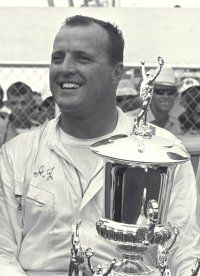
![]() © Ford Motorsports History via Wieck A.J. Foyt outdueled the NASCAR regulars to the checkered flag. |
Margin of victory: 1 lap-plus
Why it's No. 8: Foyt's victory in the 1972 Daytona 500 was significant for much the same reason as Andretti's in 1967: A big-name driver from the other side of the tracks (Indy cars) brought attention and prestige to stock car racing.
Foyt, a bigger-than-life Texan, made a Joe Namath-like guarantee prior to the 1972 Daytona 500: "I'll win it." Early on, though, it looked as if Foyt would have trouble living up to his words. He got jammed in traffic and was forced to elbow his way through the crowd of roughhewn NASCAR regulars.
It wasn't until the closing laps, after a contending Richard Petty was sent to the garage because of car failure, that Foyt found himself free and clear of the pack.
Foyt then sailed to the checkered flag, beating Charlie Glotzbach by almost two laps, the biggest margin of victory in Daytona 500 history.
Foyt's gutsy -- and ultimately dominant -- performance earned high praise from the NASCAR fraternity. "He fit right in," drawled Petty.
Here are the top-10 finishers in the 1972 Daytona 500:
| Finish | Driver | Car | Money Won |
| 1 | A.J. Foyt | 1971 Mercury | $45,400 |
| 2 | Charlie Glotzbach | 1971 Dodge | $16,250 |
| 3 | Jim Vandiver | 1970 Dodge | $10,475 |
| 4 | Benny Parsons | 1970 Mercury | $7,150 |
| 5 | James Hylton | 1971 Ford | $5,925 |
| 6 | Cale Yarborough | 1971 Plymouth | $4,660 |
| 7 | David Sisco | 1972 Chevrolet | $4,215 |
| 8 | Jabe Thomas | 1970 Plymouth | $4,365 |
| 9 | John Sears | 1970 Plymouth | $4,145 |
| 10 | Vic Elford | 1970 Plymouth | $3,445 |
For more information on NASCAR and on high-performance cars, check out:
- To learn everything you need to know about "The Great American Race" -- from its history to the technical aspects of driving at Daytona International Speedway -- read How the Daytona 500 Works.
- Ever wonder what makes a stock car go? Read How NASCAR Race Cars Work to find out.
- Driver safety is a huge concern in NASCAR. Learn what measures the series takes in this area by reading How NASCAR Safety Works.
- Muscle cars embody the NASCAR philosophy of speed and power. Here are features on more than 100 classic muscle cars, including photos and specifications for each model.
No. 7: The 1994 Daytona 500
![]() ©Wieck Media Sterling Marlin was a good ol' boy who finally made good in the 1994 Daytona 500. |
Margin of victory: 0.19 seconds
Why it's No. 7: Marlin had paid his dues. And paid. And paid. For 17 years, he had raced in NASCAR obscurity, nursing second-rate cars to second-tier finishes.
Then Marlin landed a topflight ride with Morgan-McClure Motorsports near the end of the 1993 season. The self-proclaimed country boy from Columbia, Tennessee, finally had his big chance. And he made the most of it in the 1994 Daytona 500. Marlin steadily worked his way through the field, shook off a late challenge from Ernie Irvan, and nipped Irvan at the finish by a scant .19 of a second. It was his first NASCAR win in 279 tries. And he did it in the most prestigious event on the calendar.
Afterward, as he celebrated in the bright Florida sunshine, Sterling dedicated the victory to his father, Coo Coo Marlin, a colorful character who raced 12 years in NASCAR without ever earning a victory. "This one's for Daddy," Sterling said. "He ran all those years and never won one. This one's for him."
Back in Columbia, a welcome-home parade wound through the rural farmland and onto Main Street, creating such a commotion that Sterling's wife Paula said, "It scared the cows."
Maybe the cows, like everybody else, simply were cheering.
Here are the top-10 finishers in the 1994 Daytona 500:
| Finish | Driver | Car | Money Won |
| 1 | Sterling Marlin | Chevrolet | $258,275 |
| 2 | Ernie Irvan | Ford | $190,750 |
| 3 | Terry Labonte | Chevrolet | $138,475 |
| 4 | Jeff Gordon | Chevrolet | $112,525 |
| 5 | Morgan Shepherd | Ford | $92,805 |
| 6 | Greg Sacks | Ford | $70,480 |
| 7 | Dale Earnhardt | Chevrolet | $110,340 |
| 8 | Ricky Rudd | Ford | $56,465 |
| 9 | Bill Elliott | Ford | $65,615 |
| 10 | Ken Schrader | Chevrolet | $59,565 |
For more information on NASCAR and on high-performance cars, check out:
- To learn everything you need to know about "The Great American Race" -- from its history to the technical aspects of driving at Daytona International Speedway -- read How the Daytona 500 Works.
- Ever wonder what makes a stock car go? Read How NASCAR Race Cars Work to find out.
- Driver safety is a huge concern in NASCAR. Learn what measures the series takes in this area by reading How NASCAR Safety Works.
- Muscle cars embody the NASCAR philosophy of speed and power. Here are features on more than 100 classic muscle cars, including photos and specifications for each model.
No. 6: The 1997 Daytona 500
Winner: Jeff Gordon
Margin of victory: under caution
Why it's No. 6: Today, Gordon is the most famous driver in NASCAR. And his victory in the 1997 Daytona 500 -- at 25, he became the youngest person ever to win the race -- helped catapult him to that status.
![]() ©2007 Dorsey Patrick via Wieck A 25-year-old Jeff Gordon showed the graybeards a thing or two with his win in the 1997 Daytona 500. |
The race ended under caution, but the action leading up to that point was electric -- Gordon and Bill Elliott waged a fierce battle for the lead. "It's an experience I'll never forget," Gordon said of the duel. "I got chill bumps."
Adding drama to the afternoon were the travails of Dale Earnhardt, Gordon's main NASCAR rival. Earnhardt crashed hard during the race, but when his car was hooked to a tow truck, he intervened and demanded that it be unhooked. Earnhardt then crawled inside, managed to get the mangled car started, and completed the race. That, at least, was a moral victory for the man known as "The Intimidator."
Here are the top-10 finishers in the 1997 Daytona 500:
| Finish | Driver | Car | Money Won |
| 1 | Jeff Gordon | Chevrolet | $337,410 |
| 2 | Terry Labonte | Chevrolet | $194,925 |
| 3 | Ricky Craven | Chevrolet | $155,625 |
| 4 | Bill Elliott | Ford | $133,200 |
| 5 | Sterling Marlin | Chevrolet | $121,080 |
| 6 | Jeremy Mayfield | Ford | $100,355 |
| 7 | Mark Martin | Ford | $105,515 |
| 8 | Ward Burton | Pontiac | $82,390 |
| 9 | Ricky Rudd | Ford | $88,590 |
| 10 | Darrell Waltrip | Chevrolet | $78,840 |
For more information on NASCAR and on cars in general, check out:
- To learn everything you need to know about "The Great American Race" -- from its history to the technical aspects of driving at Daytona International Speedway -- read How the Daytona 500 Works.
- Toyota introduced its Camry to NASCAR in 2007. To learn about the history of this popular car, read How the Toyota Camry Works.
- Ever wonder what makes a stock car go? Read How NASCAR Race Cars Work to find out.
- Driver safety is a huge concern in NASCAR. Learn what measures the series takes in this area by reading How NASCAR Safety Works.
- Muscle cars embody the NASCAR philosophy of speed and power. Here are features on more than 100 classic muscle cars, including photos and specifications for each model.
No. 5: The 1989 Daytona 500
Winner: Darrell Waltrip
Margin of victory: 7.64 seconds
Why it's No. 5: Waltrip was nicknamed "Jaws" because he ran his mouth as hard as he ran the motor of his race car. But the brash Tennessean liked to say: "Boys, it ain't braggin' if you do it."
In the 1989 Daytona 500, Darrell did it. Nursing a gasping gas tank, Waltrip managed to dart across the finish line 7.64 seconds ahead of Ken Schrader, claiming his first Daytona 500 win in his 17th try in, fittingly, car No. 17.
![]() ©2007 MSI/Nigel Kinrade Darrell Waltrip said this of his 1989 Daytona 500 win: "This is the race everybody will always remember." |
An incredulous Dale Earnhardt, who finished third, questioned Waltrip's amazing mileage. "I'd like to get a look at that gas tank," Earnhardt growled.
Another doubting driver said: "For $5, I'd drink what was left."
Waltrip didn't hear the harpies; he was too busy spiking his helmet and doing the "Icky Shuffle" in Victory Circle. "This is the race everybody will always remember," said Waltrip. "This is Daytona."
Waltrip has retired from racing, but he hasn't retired from talking. Today, he is an award-winning broadcaster on Fox Sports' racing telecasts.
Here are the top-10 finishers in the 1989 Daytona 500:
| Finish | Driver | Car | Money Won |
| 1 | Darrell Waltrip | Chevrolet | $184,900 |
| 2 | Ken Schrader | Chevrolet | $182,700 |
| 3 | Dale Earnhardt | Chevrolet | $95,550 |
| 4 | Geoffrey Bodine | Chevrolet | $79,250 |
| 5 | Phil Parsons | Oldsmobile | $70,325 |
| 6 | Rick Mast | Chevrolet | $52,252 |
| 7 | Alan Kulwicki | Ford | $52,325 |
| 8 | Rick Wilson | Oldsmobile | $47,325 |
| 9 | Terry Labonte | Ford | $68,400 |
| 10 | Eddie Bierschwale | Oldsmobile | $31,725 |
For more information on NASCAR and on cars in general, check out:
- To learn everything you need to know about "The Great American Race" -- from its history to the technical aspects of driving at Daytona International Speedway -- read How the Daytona 500 Works.
- Toyota introduced its Camry to NASCAR in 2007. To learn about the history of this popular car, read How the Toyota Camry Works.
- Ever wonder what makes a stock car go? Read How NASCAR Race Cars Work to find out.
- Muscle cars embody the NASCAR philosophy of speed and power. Here are features on more than 100 classic muscle cars, including photos and specifications for each model.
No. 4: The 1998 Daytona 500
![]() ©2007 Wieck Media Emotion overtook the pits and the grandstands when Dale Earnhardt won the 1998 Daytona 500. |
Margin of victory: under caution
Why it's No. 4: Earnhardt, the baddest dude in racing, was nicknamed "The Intimidator." Daytona International Speedway, however, wasn't scared -- Earnhardt had been unable to intimidate the fearsome track when things mattered most.
Heading into 1998, Earnhardt was 0-for-19 in the Daytona 500. He had been robbed of victories at the last second by blown tires, wrecks, dry gas tanks -- you name it.
As Earnhardt prepared for the 1998 Daytona 500, he said, "I don't know if I'm crazy or determined, but I'm more eager than ever."
It showed. With one lap to go in the race, Earnhardt was leading when a John Andretti crash brought out a caution flag. The field was frozen -- the race was over. Earnhardt, who had led the previous 61 laps, was about to win the Daytona 500.
As Earnhardt cruised down pit road on his way to Victory Circle, members of rival pit crews rushed out to slap his hand and offer him congratulations. Fans in the grandstands went wild. "Finally," Earnhardt said after climbing out of his car.
That said it all. At long last, the toughest driver of them all had overcome his tough luck in the Daytona 500.
Here are the top-10 finishers in the 1998 Daytona 500:
| Finish | Driver | Car | Money Won |
| 1 | Dale Earnhardt | Chevrolet | $1,059,805 |
| 2 | Bobby Labonte | Pontiac | $549,255 |
| 3 | Jeremy Mayfield | Ford | $375,705 |
| 4 | Ken Schrader | Chevrolet | $313,480 |
| 5 | Rusty Wallace | Ford | $232,705 |
| 6 | Ernie Irvan | Pontiac | $205,200 |
| 7 | Chad Little | Ford | $127,680 |
| 8 | Mike Skinner | Chevrolet | $135,705 |
| 9 | Michael Waltrip | Ford | $142,705 |
| 10 | Bill Elliott | Ford | $129,155 |
For more information on NASCAR and high-performance cars, check out:
- To learn everything you need to know about "The Great American Race" -- from its history to the technical aspects of driving at Daytona International Speedway -- read How the Daytona 500 Works.
- Ever wonder what makes a stock car go? Read How NASCAR Race Cars Work to find out.
- Driver safety is a huge concern in NASCAR. Learn what measures the series takes in this area by reading How NASCAR Safety Works.
- Muscle cars embody the NASCAR philosophy of speed and power. Here are features on more than 100 classic muscle cars, including photos and specifications for each model.
No. 3: The 1959 Daytona 500
Winner: Lee Petty
Margin of victory: 2 feet
Why it's No. 3: This was the first Daytona 500, and it was a dilly. Petty -- the patriarch of NASCAR's First Family -- sped toward the finish line in a side-by-side battle with Johnny Beauchamp, a hiccup finish made even more complicated by the fact that Joe Weatherly, two laps down, was wedged in beside the two leaders. The three cars crossed the finish line in a dead-heat blur.
Who won? Nobody knew. It was too close to call.
![]() ©Ford Motorsports History via Wieck Bill France Sr. [left] spent three days trying to figure out who won the 1959 Daytona 500. |
It took three days of studying still photos of the finish before NASCAR president Bill France Sr. finally proclaimed Petty the victor. Did he make the correct call? The debate continues to this day.
The controversial finish was good news for the fledgling sport. For three days, it kept NASCAR and the Daytona 500 on the front page of sports sections around the country. Stock car racing had never received so much publicity -- the Daytona 500 was on its way.
Here are the top-10 finishers in the 1959 Daytona 500:
| Finish | Driver | Car | Money Won |
| 1 | Lee Petty | 1959 Oldsmobile | $19,050 |
| 2 | Johnny Beauchamp | 1959 T-Bird | $7,650 |
| 3 | Charley Griffith | 1957 Pontiac | $4,600 |
| 4 | Cotton Owens | 1958 Pontiac | $2,525 |
| 5 | Joe Weatherly | 1959 Chevrolet | $1,875 |
| 6 | Jim Reed | 1959 Chevrolet | $1,075 |
| 7 | Jack Smith | 1959 Chevrolet | $2,625 |
| 8 | Tom Pistone | 1959 T-Bird | $1,825 |
| 9 | Tim Flock | 1959 T-Bird | $800 |
| 10 | Speedy Thompson | 1957 Chevrolet | $600 |
For more information on NASCAR and on cars in general, check out:
- To learn everything you need to know about "The Great American Race" -- from its history to the technical aspects of driving at Daytona International Speedway -- read How the Daytona 500 Works.
- Toyota introduced its Camry to NASCAR in 2007. To learn about the history of this popular car, read How the Toyota Camry Works.
- Ever wonder what makes a stock car go? Read How NASCAR Race Cars Work to find out.
- Muscle cars embody the NASCAR philosophy of speed and power. Here are features on more than 100 classic muscle cars, including photos and specifications for each model.
No. 2: The 1979 Daytona 500
![]() ©2007 Wieck Media Richard Petty remembers the 1979 Daytona 500 with a chuckle. Of the brawl between the Allison brothers and Cale Yarborough, he says: "I'd have liked to have stopped and watched." |
Margin of victory: 1 car length
Why it's No. 2: Petty won the 1979 Daytona 500, but nobody was watching. When he crossed the finish line, everyone's eyes were glued to the Daytona International Speedway infield, where Cale Yarborough was slugging it out with the Allison brothers, Donnie and Bobby.
Cale and Donnie had been waging a stubborn side-by-side battle heading into the final lap. Neither would budge an inch, and when they couldn't wedge two cars into a hole made for only one car, they collided and crashed. Their wrecked cars went spinning off the track and jolted to a stop in the muddy infield.
Bobby, driving in the back of the pack, pulled over to check on his brother. Then he made the mistake of "checking" on Yarborough. A stocky, hickory-tough former semipro football player, Yarborough had a quick temper. Suddenly, helmets were swinging and fists were flying.
This was the first NASCAR race ever to be televised live flag-to-flag, and the viewers got an eyeful. They were captivated as they watched those wild-and-crazy stock car drivers beat each other to pieces both on and off the racetrack.
NASCAR would grow into the second-highest-rated pro sport on TV, behind only the NFL -- and it all started with a fistfight on a muddy Daytona infield.
"I'd have liked to have stopped and watched," chuckled Petty, who sailed past the wreck on his way to victory. "It looked pretty excitin'."
Here are the top-10 finishers in the 1979 Daytona 500:
| Finish | Driver | Car | Money Won |
| 1 | Richard Petty | Oldsmobile | $73,900 |
| 2 | Darrell Waltrip | Oldsmobile | $59,350 |
| 3 | A.J. Foyt | Oldsmobile | $38,550 |
| 4 | Donnie Allison | Oldsmobile | $39,600 |
| 5 | Cale Yarborough | Oldsmobile | $34,525 |
| 6 | Tighe Scott | Buick | $24,550 |
| 7 | Chuck Bown | Buick | $18,895 |
| 8 | Dale Earnhardt | Buick | $22,845 |
| 9 | Coo Coo Marlin | Chevrolet | $15,885 |
| 10 | Frank Warren | Dodge | $17,475 |
For more information on NASCAR and high-performance cars, check out:
- To learn everything you need to know about "The Great American Race" -- from its history to the technical aspects of driving at Daytona International Speedway -- read How the Daytona 500 Works.
- Ever wonder what makes a stock car go? Read How NASCAR Race Cars Work to find out.
- Driver safety is a huge concern in NASCAR. Learn what measures the series takes in this area by reading How NASCAR Safety Works.
- Muscle cars embody the NASCAR philosophy of speed and power. Here are features on more than 100 classic muscle cars, including photos and specifications for each model.
No. 1: The 1976 Daytona 500
Winner: David PearsonMargin of victory: 150 feet
Why it's No. 1: Pearson was known as the "Silver Fox" because of his slyness on the track. Most fans considered only one driver to be his equal: Richard "The King" Petty.
Pearson and Petty had waged many battles over the years, and the 1976 Daytona 500 was perhaps the most memorable installment in their rivalry. They were side-by-side as they screamed toward the finish line on the final lap. It was a test of guts, grit, and gumption. Neither driver gave an inch.
![]() ©Ford Motorsports History via Wieck Few drivers in NASCAR were more cunning than David Pearson -- but his victory in the 1976 Daytona 500 came down to guts, not guile. |
Their cars touched, swerved, and then crashed hard into the wall 20 yards shy of the finish line. Petty's crushed car spun into the infield and stalled. Pearson -- shouting into his radio, "Where's Richard!?" -- managed to get his equally mangled racer refired. He wobbled across the line at 30 mph, smoke billowing from his car and torn metal clanking.
"For a minute, I thought I was going to become the first driver to win the Dayton 500 backwards," said Pearson.
Win the Daytona 500 he did. It was the greatest finish ever in NASCAR's greatest race.
Here are the top-10 finishers in the 1976 Daytona 500:
| Finish | Driver | Car | Money Won |
| 1 | David Pearson | Mercury | $46,800 |
| 2 | Richard Petty | Dodge | $35,750 |
| 3 | Benny Parsons | Chevrolet | $23,680 |
| 4 | Lennie Pond | Chevrolet | $16,890 |
| 5 | Neil Bonnett | Chevrolet | $14,000 |
| 6 | Terry Ryan | Chevrolet | $13,800 |
| 7 | J.D. McDuffie | Chevrolet | $11,260 |
| 8 | Terry Bivins | Chevrolet | $9,665 |
| 9 | Richard Childress | Chevrolet | $8,990 |
| 10 | Frank Warren | Dodge | $8,340 |
For more information on NASCAR and cars in general, check out:
- To learn everything you need to know about "The Great American Race" -- from its history to the technical aspects of driving at Daytona International Speedway -- read How the Daytona 500 Works.
- Ever wonder what makes a stock car go? Read How NASCAR Race Cars Work to find out.
- Driver safety is a huge concern in NASCAR. Learn what measures the series takes in this area by reading How NASCAR Safety Works.
- Muscle cars embody the NASCAR philosophy of speed and power. Here are features on more than 100 classic muscle cars, including photos and specifications for each model.
- Toyota introduced its Camry to NASCAR in 2007. To learn about the history of this popular car, read How the Toyota Camry Works.
Larry Woody covers auto racing for The Tennessean in Nashville. He is a three-time Tennessee Sports Sportswriter of the Year and a member of the International Motorsports Hall of Fame.