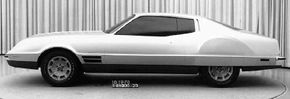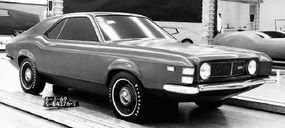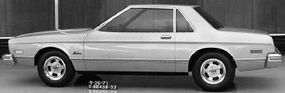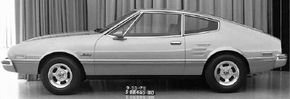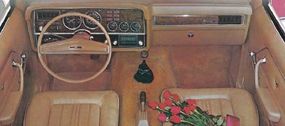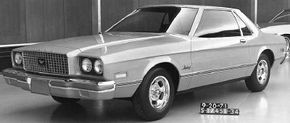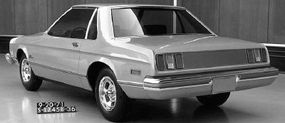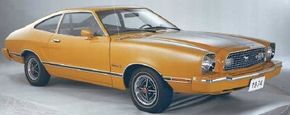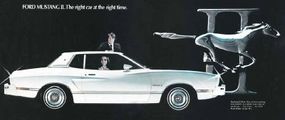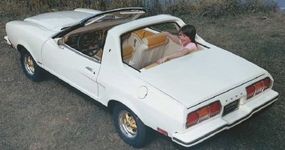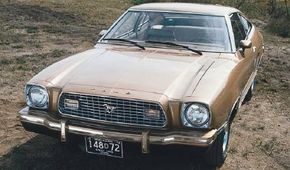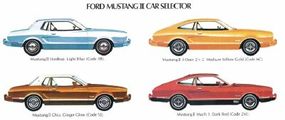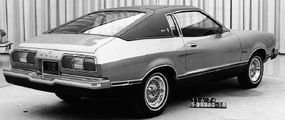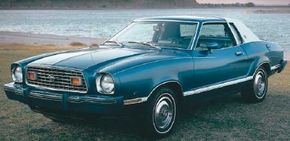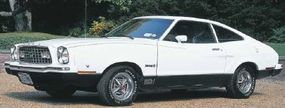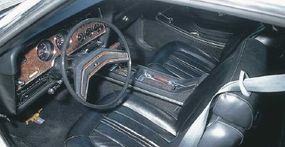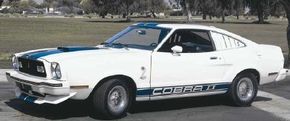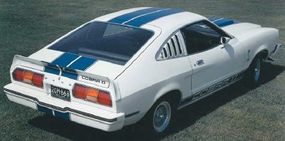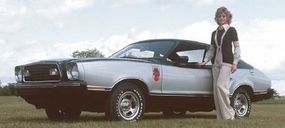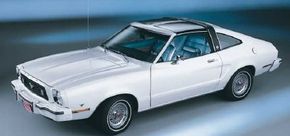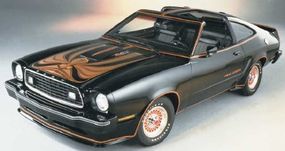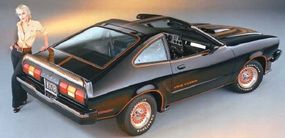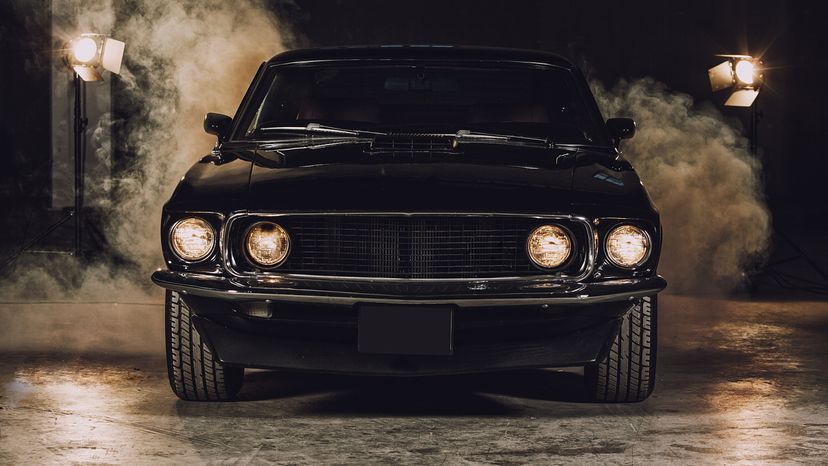
The 1974 Ford Mustang, a dramatically smaller, lighter design, marked a fresh start for America's original pony car. It was the brainchild of Lee Iacocca, who fathered the first Mustang a decade earlier. Appropriately named Mustang II, the car eventually would be seen as a low point in Mustang's proud history. But that's certainly not the way it started out.
Success often stems as much from common sense and dumb luck as from cleverness and hard work. The Mustang II is a case in point. As the smallest, lightest Mustang since the original, it was a fresh start for Ford's pony car and a refreshing return to rationality. And it couldn't have been better timed, introduced just two months before the first "Energy Crisis" upended America. People came in droves to see the Mustang II -- and to buy.
Advertisement
First-year sales were a smashing 385,993 cars, within 10 percent of the original Mustang's 12-month production record of 418,812. Of course, the Mustang II was in the works long before the Organization of Petroleum Exporting Countries (OPEC) decided to squeeze world oil supplies. That it appeared at virtually the same time was mere coincidence, though a lucky break for Ford.
In several ways, the Mustang II shows how history repeats itself in the automotive world. For starters, Lee Iaccoca just knew the market was ready for it in the same way he suspected the original Mustang was the right car for its time. Pony cars were falling from favor by 1970, with many buyers turning to lower-priced, fuel-efficient compacts like Ford's own Maverick -- a huge first-year success itself.
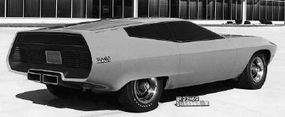
But Americans were also turning on to sporty 2+2 import coupes like Ford's own British/German Capri, which bowed in April 1970 to good reviews and strong initial demand. Another "captive import," GM's German-built Opel Manta, was selling well, and the Toyota Celica was more popular still. In 1965 such "mini-pony cars" attracted fewer than 100,000 sales, but by 1972 were up to around 300,000 -- and expected to go above 400,000 by '74. Mustang II's mission was to capture a big slice of this sizable new pie.Ford design vice president Eugene Bordinat gave full credit to Iacocca for the Mustang II: "[He] was the first guy to come along [at Ford] who had the feeling for cars that had existed in General Motors for some time." For his part, Iacocca observed: "When I look at the foreign-car market and see that one in five is a sporty car, I know something's happening. Look at what the Celica started to do before the two devaluations [of the dollar] nailed it! Anyone who decides to sit this out just ain't gonna dance!"But Ford didn't start out to start over. The Mustang II program actually dates from around the middle of 1969, when work began on what was then simply the next Mustang. With muscle-car mania still raging, first thoughts inevitably centered on larger, heavier-looking designs, reflecting Ford's belief that buyers would still want roomy, "impressive" pony cars in the mid-Seventies.In fact, early proposals were even more hulking than the '71 Mustang then nearing completion. But by the time Iacocca became Ford Motor Company president in 1970, the bottom had dropped out of the pony car market, and the imported Capri -- which Iacocca said was more like the original "than any Mustang we have today" -- was doing solid business at Lincoln-Mercury dealers.Iacocca had never liked Bunkie Knudsen's '71 Mustang, and it wasn't just because the man who backed it had been favored with the president's chair. Iacocca had been troubled by Mustang's course since 1966. He wasn't alone.As author Gary Witzenburg related, the grumbling had been going on at least since 1968. At that year's stockholders meeting, one Anna Muccioli, who owned a '65 Mustang, rose to ask Henry Ford II: "Why can't you just leave a small car small?…[Y]ou keep blowing them up and starting another little one, blow that one up and start another one…[W]hy don't you just leave them?"
But Americans were also turning on to sporty 2+2 import coupes like Ford's own British/German Capri, which bowed in April 1970 to good reviews and strong initial demand. Another "captive import," GM's German-built Opel Manta, was selling well, and the Toyota Celica was more popular still. In 1965 such "mini-pony cars" attracted fewer than 100,000 sales, but by 1972 were up to around 300,000 -- and expected to go above 400,000 by '74. Mustang II's mission was to capture a big slice of this sizable new pie.Ford design vice president Eugene Bordinat gave full credit to Iacocca for the Mustang II: "[He] was the first guy to come along [at Ford] who had the feeling for cars that had existed in General Motors for some time." For his part, Iacocca observed: "When I look at the foreign-car market and see that one in five is a sporty car, I know something's happening. Look at what the Celica started to do before the two devaluations [of the dollar] nailed it! Anyone who decides to sit this out just ain't gonna dance!"But Ford didn't start out to start over. The Mustang II program actually dates from around the middle of 1969, when work began on what was then simply the next Mustang. With muscle-car mania still raging, first thoughts inevitably centered on larger, heavier-looking designs, reflecting Ford's belief that buyers would still want roomy, "impressive" pony cars in the mid-Seventies.In fact, early proposals were even more hulking than the '71 Mustang then nearing completion. But by the time Iacocca became Ford Motor Company president in 1970, the bottom had dropped out of the pony car market, and the imported Capri -- which Iacocca said was more like the original "than any Mustang we have today" -- was doing solid business at Lincoln-Mercury dealers.Iacocca had never liked Bunkie Knudsen's '71 Mustang, and it wasn't just because the man who backed it had been favored with the president's chair. Iacocca had been troubled by Mustang's course since 1966. He wasn't alone.As author Gary Witzenburg related, the grumbling had been going on at least since 1968. At that year's stockholders meeting, one Anna Muccioli, who owned a '65 Mustang, rose to ask Henry Ford II: "Why can't you just leave a small car small?…[Y]ou keep blowing them up and starting another little one, blow that one up and start another one…[W]hy don't you just leave them?"
To her likely surprise, the chairman said he agreed. "Hopefully we will keep in mind what you say here and, hopefully, we will have a product that will be satisfactory to you."
In one nod to the past, Iacocca instituted an in-house design competition to develop the next Mustang. Get the details on the next page.
For even more on the Ford Mustang, check out the following links.
- Saddle up for the complete story of America's best-loved sporty car. How the Ford Mustang Works chronicles the legend from its inception in the early 1960s to today's all-new Mustang.
- A bigger, brawnier Mustang galloped in for 1971, just as buyers were moving away from the pony car market. In 1971-1972-1973 Ford Mustang, learn how the car still offered high style.
- Mustang began a second revolution with the handsome, sophisticated "New Breed". 1979-1980-1981 Ford Mustang tells how hit scored big in the showroom, and in fans' hearts.
- For a full report on the 2007 Ford Mustang, check out Consumer Guide New Car Reviews. Here you'll find road test results, photos, specifications, and prices for hundreds of cars, trucks, minivans, and SUVs.
Advertisement