The Tweel Airless Tire
For more than 100 years, vehicles have been rolling along on cushions of air encased in rubber. The pneumatic tire has served drivers and passengers well on road and off, but a new design by Michelin could change all that - the Tweel Airless Tire.
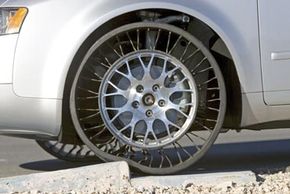
![]() ©2006 MNA, Inc Michelin Tweel TM Airless Tire. See more pictures of the Tweel Airless Tire. |
The Tweel
Michelin first announced the Tweel in 2005. The name is a combination of the words tire and wheel because the Tweel doesn’t use a traditional wheel hub assembly. A solid inner hub mounts to the axle. That’s surrounded by polyurethane spokes arrayed in a pattern of wedges. A shear band is stretched across the spokes, forming the outer edge of the tire (the part that comes in contact with the road). The tension of the shear band on the spokes and the strength of the spokes themselves replace the air pressure of a traditional tire. The tread is then attached to the shear band. The Tweel looks sort of like a very large, futuristic bicycle wheel.
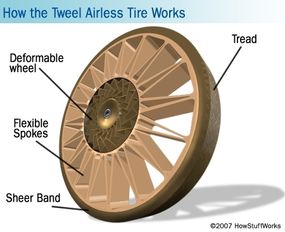
![]() ©2007 HowStuffWorks The parts of a Tweel Airless Tire. |
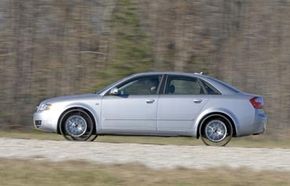
More pliant spokes result in a more comfortable ride with improved handling. The lateral stiffness of the Tweel is also adjustable. However, you can’t adjust a Tweel once it has been manufactured. You’ll have to select a different Tweel. For testing, Michelin equipped an Audi A4 with Tweels made with five times as much lateral stiffness as a pneumatic tire, resulting in “very responsive handling” [Source: Michelin].
Michelin reports that “the Tweel prototype… is within five percent of the rolling resistance and mass levels of current pneumatic tires. That translates to mean within one percent of the fuel economy” of the tires on your own car. Since the Tweel is very early in its development, Michelin could be expected to improve those numbers.
Pneumatic Tires
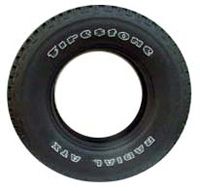
![]() Photo Courtesy of the Los Alamos Firestone Pneumatic Tire |
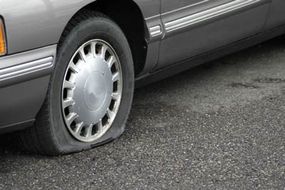
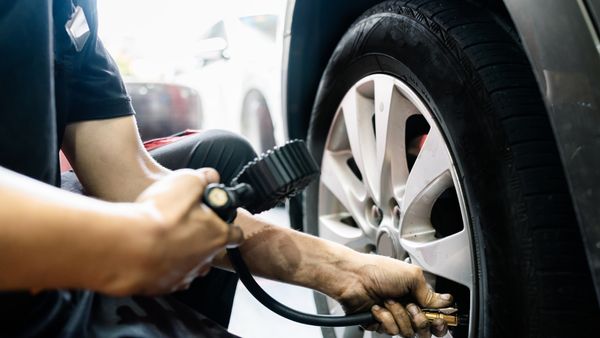
![]() © Photographer: Lane Erickson | Agency: Dreamstime.com A flat pneumatic tire |
Air pressure causes other problems, as well. Consumers are notoriously unreliable when it comes to setting their tire pressure properly, often resulting in unsafe situations. Pneumatic tires are also susceptible to changes in temperature, which can change the tire’s internal pressure.
The Future of Airless Tires
The Tweel does have several flaws (aside from the name). The worst is vibration. Above 50 mph, the Tweel vibrates considerably. That in itself might not be a problem, but it causes two other things: noise and heat. A fast moving Tweel is unpleasantly loud [Source: CBS News]. Long-distance driving at high speeds generates more heat than Michelin engineers would like.
![]() ©2006 MNA, Inc. Tweel Airless Tires on the road. |
Another problem involves the tire industry. Making Tweels is quite a different process than making a pneumatic tire. The sheer scale of the changes that would need to be made to numerous factories, not to mention tire balancing and mounting equipment in thousands of auto repair shops, presents a significant (though not insurmountable) obstacle to the broad adoption of airless tires.
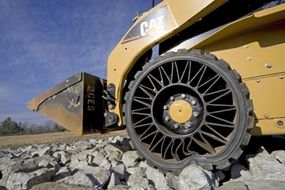
Because of these flaws, Michelin is not planning to roll out the Tweel to consumers any time soon. “Radial tire technology will continue as the standard for a long time to come,” said Michelin’s press release touting Tweel development. They are initially working on Tweel use in low-speed applications, such as on construction vehicles. The Tweel is perfect for such use because the high-speed vibration problems won’t come into play, and the ruggedness of the airless design will be a major advantage on a construction site. Michelin is also exploring military use of the Tweel.
![]() ©2006 MNA, Inc. Construction vehicle using the Tweel Airless Tire. |
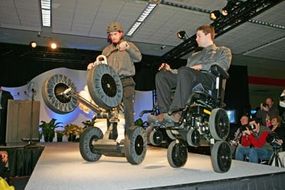
![]() ©2006 MNA, Inc. The iBOT and Segway Centaur |
Michelin isn’t the only company working on an airless tire design. Resilient Technologies is developing their own airless tire, known as the NPT (non-pneumatic tire). That company is using a more aggressive development and marketing strategy aimed at military use. The NPT is based on a different configuration of spokes, but the general idea is the same as the Tweel [Source: Fox News].
For more information on the Tweel Airless Tire and related topics, check out the links on the next page.
Tweel Airless Tire: Lots More Information
Related HowStuffWorks Articles
- How Tires Work
- How Self-Inflating Tires Work
- Tire Buying Tips
- How Tire Pressure Gauges Work
- How Cars Work
- How Bicycles Work
- How Motorcycles Work
- How Harley-Davidson Works
- How Caterpillar Backhoe Loaders Work
- How Hydraulic Machines Work
More Great Links
Sources
- CBS News. “Airless Tires? Consider The Tweel.” http://www.cbsnews.com/stories/2005/01/27/eveningnews/main669888.shtml
-
Fast Cool Cars. “Airless Tires, New from Michelin.”
http://www.fastcoolcars.com/airless-tires.htm -
Fox News. “Military Contractors Develop Prototype of Airless Tire.” http://www.foxnews.com/story/0,2933,240737,00.html?sPage=fnc.technology/innovation
-
Michelin. “Michelin Lets the Air Out of Future Tire Innovation.” http://www.michelinman.com/difference/releases/pressrelease01102005a.html