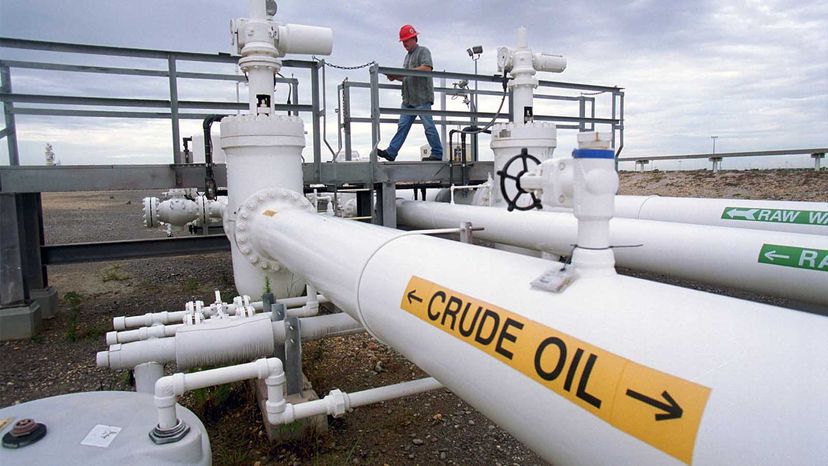
When Americans talk of "oil reserves," they're actually talking about the United States Strategic Petroleum Reserve (SPR). The Strategic Petroleum Reserve is the U.S. government's stash of crude oil that's stored in four salt caverns along the Texas and Louisiana Gulf Coasts.
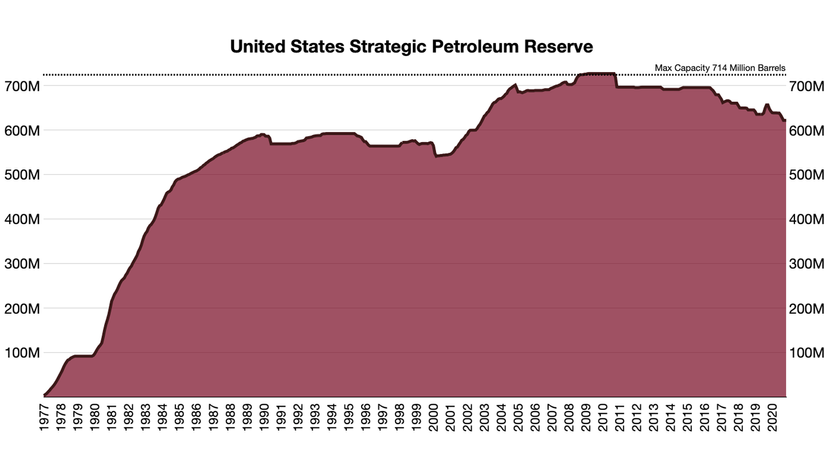
The U.S. oil reserves have an authorized capacity of 714 million barrels, though the most oil the reserve has ever held was 726.6 million barrels on Dec. 27, 2009. On Oct. 14, 2022, the SPR contained 405.1 million barrels of crude oil. The capacity of the SPR makes it a deterrent to oil import cutoffs and a key tool in foreign policy.
Advertisement
To offset further disruption in commercial oil supplies that would compromise the United States' security position or economy, the government created the SPR after the 1973 to 1974 oil embargo. It was also necessary for the United States to meet its obligations, according to the International Energy Agency's (IEA) emergency oil supply requirements.